

Rabbits Infected With Virus With No Known Cure
Recently, in Fort Collins, Colorado, rabbits have been spotted with unsightly growths protruding from their heads.
No, it isn’t a jackalope… but this condition may have inspired the myth of that horned creature.
In a statement to 9News, Colorado Parks and Wildlife confirmed this is the result of a virus.
Called Shope papilloma virus, or cottontail cutaneous papilloma virus, this virus results in rabbits appearing to have dark tentacle-like growths developing on their faces or the upper part of their body, according to PetMD.
“The condition is not dangerous to humans or pets,” Colorado Parks and Wildlife said, while still urging people to “avoid approaching or touching the animals.”
What Has Been Observed In Rabbits In Fort Collins
Speaking with 9News, a resident of the Fort Collins area named Susan Mansfield said, “It looks like it was black quills or black toothpicks sticking out all around his or her mouth. I thought he would die off during the winter, but he didn’t. He came back a second year, and it grew.”
Another resident said a rabbit was seen with “a scabbiesh-looking growth over their face.”
Even 9News reporter Amanda Gilbert saw one of the infected rabbits, and her photograph of the rabbit — which has small tentacle-like growths coming from its face — can be seen here.
Comments online have ranged from shock to sorrow for the little critters.
One person commented on Facebook, “Poor bunnies.”
Some readers inquired about the affect of the Rocky Flats Plant, which was once a developer of plutonium for nuclear weapons during the Cold War. Located just 15 miles out of Denver, or approximately 65 miles from Fort Collins, the Rocky Flats Plant was raided by the EPA and FBI in 1989, with a cleanup conducted through 2006.
Looking to 2025 so far, another person wrote, “My bingo card has been filled.”

More About The Shope Papilloma Virus
Sequenced in 1984, a study of the virus and its presence in rabbits was first conducted in 1933 by American virologist Richard E. Shope, whom the virus is named after.
The virus was the first of its kind to be identified within mammals, with the virus causing cancer in infected rabbits, according to Advances In Cancer Research, Vol. 35.
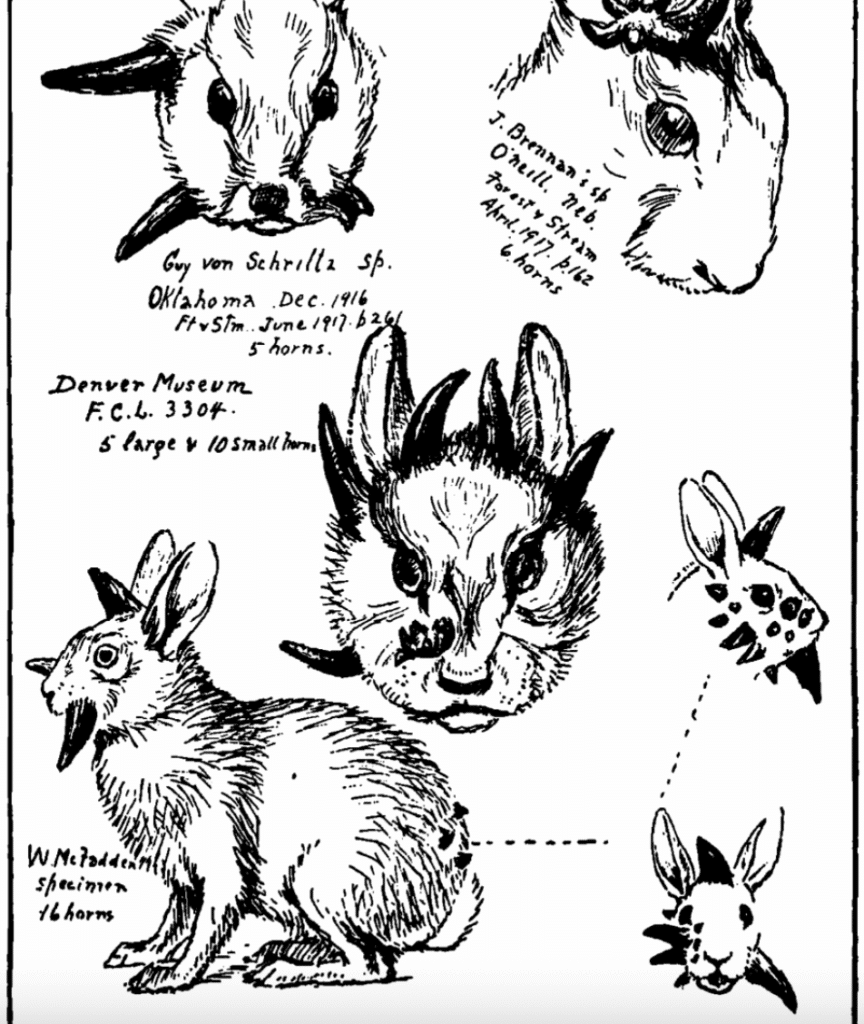
Often spread by ticks and mosquitos, PetMD notes that there is treatment for domestic rabbits which have the Shope papilloma virus.
In the diagnosis of this disease, PetMD says that removing the nodules and conducting a biopsy “to confirm the malignancy of the cancer” is important.
While it is recommended that tumorous growths be removed, some infections can “resolve themselves on their own.”
According to PetMD, “Keeping the rabbit away from pests, including mosquitoes and ticks, is the best way to prevent the animal from contracting Shope papilloma virus.”