Six Planets Will Be In Alignment On Saturday, Feb. 28
Looking up to the night sky in February, the sight of Jupiter is not unusual…
However, Jupiter won’t be alone in the skies on Saturday, Feb. 28.
Altogether, there will be six planets visible all at once for those living in the Northern Hemisphere: Mercury, Venus, Neptune, Saturn, Uranus, and Jupiter.
As we live on Earth, that means that — of the eight planets in our Solar System — only Mars will not be visible.
This alignment is referred to as a “planetary parade,” with NASA writing:
“Because the planets in our solar system travel around the Sun in the same plane (known as the ecliptic), they will sometimes appear bunched together in the sky when their orbits find them on the same side of the Sun at the same time. When this happens, it looks like the planets have roughly formed a line from our vantage point on Earth.”
How And When To Experience The Planetary Parade
While the six planets in the “planetary parade” will be visible in the days leading up to and following Feb. 28, they will be most clearly visible on Saturday, Feb. 28.
Of the six planets, four will be readily visible — weather permitting — without a telescope or other tools, and those four are Mercury, Venus, Saturn, and Jupiter.
NASA notes that “those with optical assistance will be able to view Uranus and Neptune,” and that Mercury is sometimes difficult to spot.
The best time to view this alignment of planets will be 30 minutes to an hour after the Sun sets. Not only is Mercury sometimes a challenge for amateur astronomers to locate, seeing it is time sensitive, with StarWalk noting the following:
“Mercury is the “blink-and-you-miss-it” planet: it sits very low and drops fast after sunset. Uranus usually needs binoculars, and Neptune is typically a telescope target.”
Notably, Jupiter will be positioned above the Moon, appearing like a bright star to the naked eye.
Commemorating the “planetary parade,” NASA’s Chandra X-ray Observatory has provided sonifications of three of the planets: Jupiter, Saturn, and Uranus.
With the help of a sonification, which NASA says translates “astronomical data into sound,” these planets “can be seen and heard in ways that they cannot from Earth.”
Listen to the newly released sonifications of Jupiter, Saturn, and Uranus, here:

If you’d like to experience the planets as music, enjoy Gustav Holst’s orchestral suite The Planets.
Completed in 1917, Holst’s The Planets would go on to be a significant inspiration for John Williams in the composing of the Star Wars soundtrack.
Watch the Southern Methodist University Meadows Symphony Orchestra perform The Planets, here:

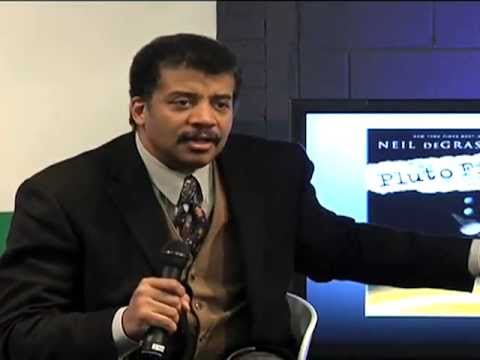
On the other hand, astrophysicist Neil deGrasse Tyson explained that “something can be rare and not even special,” particularly when it comes to planetary alignments.
Speaking at Google in 2009, deGrasse Tyson debunked some of the “planetary parade” crazy, saying, “You think you’re living in special times until you realize that a week later there’s another configuration of planets that no one has ever seen in recorded history … if you have a million alignments that only happen once in a million years, then that’s an alignment every year, so something can be rare, but not interesting.”
Watch his comments, here: